Ready to talk? Free, confidential advice — no obligation
Download Brochure 0330 111 2015

Delamere’s 15-Month Addiction Aftercare Programme: Designed to Support Lasting Recovery

At Delamere, we believe that addiction treatment goes far deeper than simply stopping the addictive substance or behaviour. That’s why we offer an extensive 15-month aftercare programme to help you settle back into daily life after completing your stay with us.

  • Weekly aftercare meetings for 15 months to support your recovery
  • Access to the Delamere Alumni App to stay up to date with your programme
  • Intermediate care through our 12 weekly Bloom sessions to help you settle back into daily life

4.91 / 5 · 300+ verified reviews

Written by

Chris Lomas

Head of Therapy & Programme

Chris Lomas is Head of Therapy & Programme at Delamere I oversee the implementation, evolution and delivery of evidence-based therapeutic programmes.

  • PGDip CBT
  • MSc Psychology
  • MSc Advanced Counselling & Psychotherapy
View full professional profile
Published
Latest medical review
Doctify Outstanding Patient Experience award

Introduction

Introducing Our Extensive Addiction Aftercare Support

During the final treatment modules at Delamere, we help you prepare to return home to your individual circumstances. During your stay with us, you can expect to gain an understanding of your individual triggers and gain coping strategies before it’s time to leave.

However, our support doesn’t simply end once your stay with us is complete. The last phase of the Delamere treatment model is our 15-month aftercare programme. We offer weekly meetings throughout your 15 months of aftercare, which can be attended at Delamere or online.

This is supported by our Bloom programme, which begins with 12 weekly meetings in small groups to support you through the first 3 months of recovery after you return home. The bespoke syllabus is designed to help you transition back into everyday life after completing addiction rehab treatment with Delamere.

You’ll also be provided access to our Delamere Alumni App, allowing you to stay up to date with your aftercare programme, celebrate milestones, and reach out directly to our team should you need to.

Video

What Happens After Addiction Rehab Treatment?

It’s perfectly natural to feel nervous about the prospect of returning home after your addiction rehab treatment. Delamere’s addiction treatment programme allows you to remove yourself from the stresses of daily life and address the root causes of addiction.

When you return home, there will likely be an adjustment period whilst you settle back into life with the tools you have developed during your stay with us.

The extensive aftercare programme offered by Delamere plays a vital role in supporting your ongoing recovery. You’ll be offered structured support as you transition back into everyday life.

Find out more on our YouTube channel

The Delamere difference

What is Involved in the Delamere Aftercare Programme?

Once you’ve completed your residential treatment at Delamere, you will begin our Bloom intermediate care programme. Bloom acts as a bridge between residential treatment and the rest of your aftercare support.

During your first 3 months of aftercare, you can also return to Delamere twice a week to receive expert support in the early stages of recovery.

Every Delamere guest will complete our Future Proofing programme with support from our expert team of therapists and mentors. This core assignment will cover the practical recovery activities you can build into daily life as you move forward after your stay with us.

You can continue to receive support with weekly meetings throughout our full 15-month aftercare programme. Our extensive aftercare is designed to offer long-term support to ensure you have everything you need to achieve the best possible outcomes in recovery.

Detox

Why Choose Delamere’s Addiction Treatment and Aftercare Services?

Once you have completed our rehabilitation programme at Delamere, you can expect to benefit from the following:

  • You will physically feel and look much healthier and rested.
  • You will feel true emotions and be able to effectively manage them without the need for a drink or drug.
  • You will be able to form healthy relationships with others.
  • You will have learned boundaries that keep you and your recovery safe.
  • You will have learned that your spirit, mind and physical being all need to be nourished to stay balanced.
  • You will have gained recovery tools that you can apply to your daily living.
  • You will have started to make peace with your past and be able to enjoy the present moment.
  • You will be able to respond to challenges rather than react.
  • You will have the tools and support to completely recreate your life.

By staying connected with our Delamere aftercare treatment team, you will achieve all of this and so much more.

With us by your side, you can celebrate your achievements and progress, no matter how big or small. We will continue to support you in meeting new challenges and staying motivated in your recovery.

Aftercare

Our rehab aftercare services

When you stay with Delamere, our support doesn't simply end when you complete your inpatient rehab treatment. Our team will still be available to support you through our specialist aftercare services.

We provide 12 weekly meetings in small groups to support you during the first three months of recovery after you return home. The bespoke syllabus is designed to help you transition back into everyday life after completing your stay with us.

You can also benefit from aftercare sessions twice a week for 15 months, with access to expert advice and support from our team of therapists and counsellors. Many people keep in touch with fellow guests through our aftercare services, creating a community that supports each other in recovery long after they leave.

Delamere statue on the grounds

Loved ones

Staying Connected in Your Aftercare with the Delamere App

The Bloom programme comprises 12 workshops taken in small groups with fellow guests who have recently completed a stay at Delamere.

The modules will cover many of the ‘firsts’ that you may experience in early recovery. Your sessions will also revisit some of the theory that you have worked through during your residential stay with Delamere.

We’ve launched the Delamere Alumni App to support your aftercare, allowing you to access vital information and reach out to the Delamere team.

All Delamere guests are provided access to the alumni app as they prepare for discharge at the end of a stay with us. Our care team will be available to introduce you to the app and the features available to you, including:

Sobriety Clock

You can view an accurate display of how long you have been in sobriety, allowing you to celebrate milestones and stay up to date with your progress. You’ll also have access to our financial tracker where you can view how much money you have saved since stopping active addiction.

Reach Out Button

You can reach out directly to the Delamere team to request support without the need to pick up the phone.
Anyone who has suffered a relapse can reach out through the app, and a member of our team will be in touch to offer support. You can also reach out to our team if you need more support through our ‘I need to talk’ button. A member of our care team will then contact you directly to provide the guidance you need.

Content Hub

Our content hub offers a range of useful materials and information to support you in recovery. This includes materials for your Bloom aftercare sessions, refresher flash cards covering the main themes from your group programme, and the opportunity for daily reflections and gratitude logs.

Community Hub

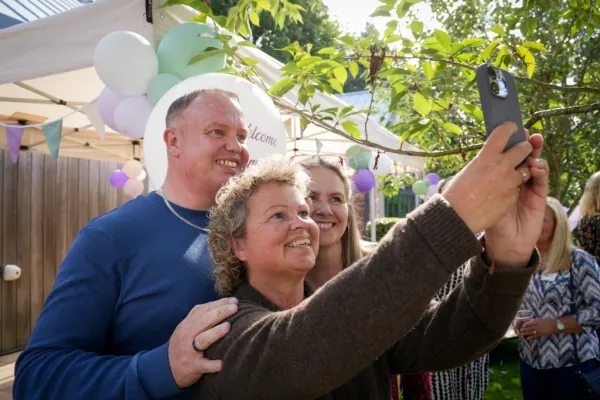
Our community hub offers a social feed allowing Delamere alumni to share recovery milestones with fellow guests. You can also view the latest updates from Delamere, including invites to alumni social events such as reunions celebrating recovery.


FAQs

What Will the Bloom Aftercare Modules Cover?

Your first session begins with rediscovering who you are and rebuilding a life that feels meaningful and true to you. We look at some practical tools for goal setting and self-awareness, helping you set clear, achievable goals to shape a future that aligns with your hopes and priorities.

In this session, we’ll explore what’s really happening beneath the surface when you feel thrown off by certain triggers. You’ll learn how to identify your unique internal and external triggers, map out your personal risk profile, and begin building a toolkit of practical, in-the-moment strategies to stay grounded.

Mind on Trial takes a closer look at the stories you tell yourself, especially the ones that show up when no one else is around.

This session goes beyond surface-level positivity and into something more honest and useful. This includes learning to recognise distorted thoughts, questioning their truth, and building a mindset grounded in self-awareness and self-compassion.

Session 4 is designed to help you navigate families, friendships, and intimate relationships as you return to everyday life. By recognising the roles and habits that addiction can entrench within our families, we can reflect on our own experience whilst also exploring new ways of communicating with our loved ones.

Relapse is often misunderstood as a sudden fall, when in reality it unfolds gradually through patterns of thought, feeling, and behaviour. Session 5 reframes relapse not as a failure, but as a process of regression that can be recognised, anticipated, and interrupted.

By naming the subtle cues that signal a slide, such as isolation, neglecting routines, or rationalising unhealthy choices, you can gain the tools to see relapse coming long before it reaches crisis point.

Many people emerge from treatment with uneven strengths across key life domains such as health, housing, finances, and conflict resolution.

Session 6 allows you to take a compassionate, shame-free inventory of your current circumstances, recognising both what is working and where unmet needs may pose an emotional risk.

By referring to gaps as opportunities rather than failures, the session encourages honest reflection without self-judgement.

Sustainable recovery requires more than avoiding relapse; it depends on learning how to manage energy, stress, and wellbeing in ways that support long-term resilience.

Recharge & Rebuild reframes self-care not as indulgence or luxury, but as a practical, evidence-based foundation for maintaining stability. You will be encouraged to notice what drains you, what fuels you, and where small, consistent rituals of repair can make the biggest difference.

Recovery is not just about what we leave behind, it’s also about the connections we build moving forward.

This session invites you to explore how meaningful, supportive relationships can act as safeguards for long-term stability. By mapping current connections and identifying areas of disconnection, you will begin to see where community can be both a source of strength and a pathway to growth.

Recovery is about more than leaving harmful patterns behind; it is about discovering what makes life worth living.

Session 9 invites you to step into a deeper exploration of who you are becoming, not just what you are avoiding. By engaging with sources of awe, wonder, and purpose, you’ll be supported in reconnecting with aspects of identity that addiction may have obscured but never erased.

Recovery is a living process, not a fixed state. As life unfolds, transitions (whether welcomed or unexpected) can shake stability and test resilience.

Session 10 recognises that change is a constant and that how we respond to it often shapes the trajectory of recovery more than the change itself. By mapping both current and upcoming transitions, you can begin to see where risk may lie and how to prepare for it with steadiness rather than collapse.

Your penultimate session will offer space to pause, reflect, and take stock of how far you have come.

Session 11 offers a moment of reflection, helping you to recognise your progress as real, embodied change. By revisiting key lessons and milestones, you are encouraged to acknowledge growth as proof of resilience and the foundation for what comes next.

The final session of the initial 12-week programme marks a moment of celebration and transition. This offers the opportunity to recognise how far you have come and offers space for gratitude, reflection, and genuine pride.

You will be invited to name what you will be taking forward, including the insights, routines, relationships, and values that will keep your recovery alive beyond the programme.