What really happens to the brain and body when you take ketamine?
on 06 Nov 2025
What’s included?
- Introduction
- The effects of ketamine on the brain and body
- What stops people from getting the support they need?
- Life and recovery at Delamere
- The Bloom Programme: continuing the journey
- How Delamere can support
A study by King’s College London revealed that deaths related to ketamine have increased twentyfold since 2015, with a concerning rise in cases involving polydrug use.
At Delamere, we’ve seen this trend reflected in our own admissions; three times as many people now seek help primarily for ketamine-related issues compared to 2024.
Last month, national broadcaster LBC came to Delamere to speak about the increasing harm associated with ketamine use.
You can watch the interview and read the article here.

The effects of ketamine on the brain and body
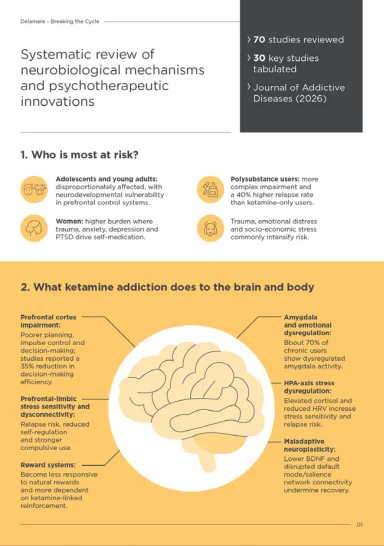
Ketamine is a powerful anaesthetic intended to be used safely in medical and veterinary settings. However, when taken recreationally, its impact can be profound and damaging.
The drug works by disrupting the brain’s neurotransmitter systems, particularly those linked to perception, memory and attention.
This disruption produces dissociative, ‘out-of-body’ experiences.
Over time, repeated exposure can interfere with cognitive processing, short-term memory and concentration.
Physically, ketamine can have a serious impact on internal organs. It can severely damage the bladder, causing UTI-like symptoms that require people to use urostomy pouches.
Regular ketamine use can also impair kidney and liver function, causing permanent damage.
Find out more about how long ketamine stays in the body.
Call us confidentially at any time to speak to a member of our team.
Call us now: 0330 111 2015
What stops people from getting the support they need?
A key barrier to people getting effective support is often fear of judgment.
Many individuals hesitate to disclose their ketamine use to healthcare professionals, meaning they may receive incorrect diagnosis and treatment for physical issues such as bladder pain or urinary frequency.
At Delamere, we encourage open and honest conversations between patients, families and clinicians.
When healthcare professionals are aware of the full picture, they can make better-informed decisions and connect people with the right support sooner; before physical or cognitive damage becomes severe.

Life and recovery at Delamere
At Delamere, guests receive 24-hour clinical care from a team of registered nurses, therapists and recovery mentors -many of whom have lived experience of addiction themselves.
We combine medical detox, one-to-one therapy and group work to help clients explore the root causes of addiction, whether they stem from trauma, stress, or other life challenges.
Guests are offered opportunities to participate in equine therapy, Qigong and many other holistic activities.
The Bloom Programme: continuing the journey
Treatment doesn’t stop when the programme ends.
Delamere’s Bloom Programme offers structured aftercare sessions that run twice a week for 15 months following residential treatment.
It helps clients maintain progress, stay accountable and grow beyond addiction whilst being surrounded by people who understand their journey.
Around half of those who abstain from ketamine for three months after treatment see meaningful improvements in bladder function and other symptoms.
More importantly, they regain confidence, structure and hope for a future free from ‘white-knuckling’ their way through life.
How Delamere can support
If you or a loved one is struggling with a ketamine addiction, Delamere offers an individualised and holistic treatment model.

The Stop, Start, Grow, Bloom model addresses the root causes of addiction, promotes self-awareness and supports sustainable recovery.
To learn more about how Delamere can support addiction, book a consultation over the phone on 0330 111 2015 or email us admissions@delamere.com.
Call us confidentially at any time to speak to a member of our team.
Call us now: 0330 111 2015


About the author: Dr Catherine Carney
As a psychiatrist with a specialist interest in addiction treatment, Catherine is a real asset to Delamere. Coupled with her experience in working with addictions for over a decade, Catherine’s grounded and down to earth approach is something our guests and clinical team value greatly.
RECENT POSTS
From sobriety to quality of life: Revisiting recovery outcome measuresThe role of alcohol in UK culture, and how to break free
Holistic diet tips to balance energy and mood
Why the world is turning to the UK for addiction treatment
CATEGORIES
-
Addiction Recovery
Addiction Reports
Alcohol Addiction
Burnout
Delamere
Digital Addiction
Drug Addiction
Holistic Programmes
Other Behaviours
Prescription Drug Addiction
Rehab
ARCHIVES
- December 2025
- November 2025
- October 2025
- September 2025
- August 2025
- July 2025
- June 2025
- May 2025
- April 2025
- March 2025
- February 2025
- January 2025