The signs and symptoms of drug addiction and drug abuse are not always obvious to the untrained eye. Many that abuse drugs are usually very careful about hiding their secret.
Others, who’s drug abuse has spiralled into a full blown drug addiction, the signs and symptoms become more obvious. Yet the question of which drug they are using may still well arise.
The signs and symptoms of drug abuse and addiction vary tremendously in their physical presentation. This is due to the fact that each person reacts differently to a drug or drugs. There are also numerous drugs available, each having its own unique set of effects.
If you are worried that a family member, work colleague, partner or friend is abusing drugs, we hope that this article will help to provide clarity and answer some questions.
By the same token, if you are concerned that your own drug abuse may have turned into an addiction, recognising the signs and symptoms of drug addiction in yourself may help you to take the courageous and life saving step in asking for professional help.
Drug addiction is a chronic and progressive brain disease, characterised by relapse and compulsive drug taking for which there is no cure (1)
A person suffering from drug addiction will often start out abusing drugs. This then leads to them developing a drug tolerance so they need to take more drugs in order to feel the desired effects.
Once addicted to a drug, a person will be compelled to take drugs despite suffering adverse consequences occupationally, financially, physically, mentally, emotionally and socially.
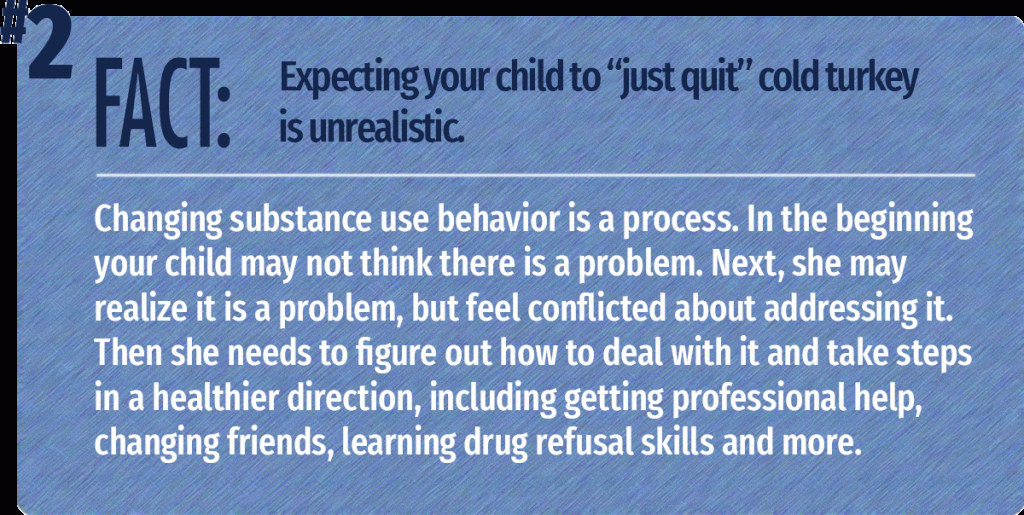
Usually, someone who suffers from drug addiction will be physically and mentally dependent on a particular drug or a combination of drugs. Going without drugs will cause them to suffer from drug withdrawal symptoms. This can cause many to continue to take drugs rather than ask for help and get clean.
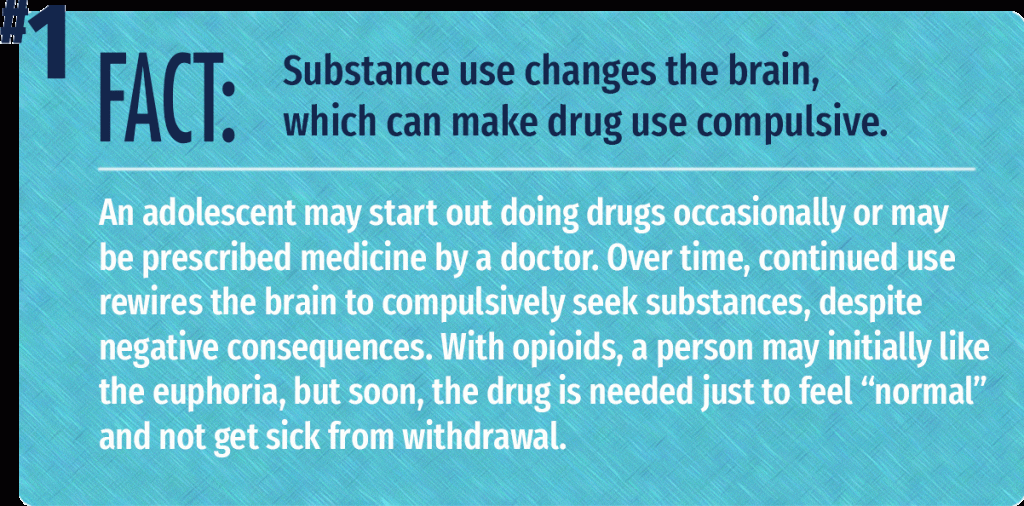
Drug addiction is defined as a brain disease due to the effects of drugs changing and damaging many functional areas of the brain.
Excessive exposure to harmful drugs changes the way the brain communicates and functions. The brain adapts by rewiring its pathways to place drugs as a priority, even above food, shelter, health and loved ones. The rewiring of the brain compels the sufferer to take drugs even when they want to stop (1,2)
As a progressive disease, without treatment, drug addiction only gets worse and never better on its own.
In terms of treatment for drug addiction, drug addiction cannot be cured but the condition can be arrested (drug detox) and recovery maintained through undergoing a drug rehabilitation programme (1)
Drug addiction may seem like a hopeless condition and the truth is that it is unless a sufferer accesses the correct treatment and support.
Drug addiction signs & symptoms
Depending on the drug being abused will affect how the physical signs and symptoms show in a person.
What we feel is of greater use in identifying a drug addiction is that no matter the drug involved, psychological symptoms of drug addiction and behavioural symptoms of drug addiction tend to be the same.
Physical signs & symptoms of drug addiction include:
Suffering drug withdrawal symptoms
Frequent drug intoxication
Drastic changes in appearance and weight
Constricted or dilated pupils depending on the drug
Bloodshot eyes, glazed eyes
Drug cravings
Compulsion to take drugs
Changes in speech – either fast, erratic and chatty or slow, slurred and delayed
Unusual sleep patterns – sleeping more or less, or at odd hours of the day
Drug paraphernalia in their possession
Drugs in their possession
Sooty or white residue of hands, fingers, face, paraphernalia or clothes
Unusual smell on clothing
Numerous empty packets of addictive prescription drugs or over the counter drugs in their possession
Unresponsive (call emergency services if you suspect a drug overdose)
Psychological signs & symptoms of drug addiction include:
Depression
Anxiety
Paranoia
Mood swings
Changes in cognitive ability
Uncharacteristic overconfidence
Feelings of invincibility
Obsessing over drugs and preoccupation – how and where to get and take them
Hallucinations – seeing or hearing things that are not there
Psychosis
Aggression
Behavioural signs & symptoms of drug addiction include:
Secrecy
Denial of problem
Lying about where they have been and what they were doing – concocting elaborate stories
Isolating from family and friends
Appearing not to care or showing consideration for others
Keeping loved ones at arm’s length
Defensiveness when challenged
Risk taking
Changes in friendship circles
Loss of interest in things they previously used to enjoy
Disappearing or being out of contact for lengthy periods of time
Manipulating loved ones
Committing crime to get money for drugs
‘Borrowing’ money that is never repaid
Neglecting personal and financial affairs
Money and items going missing to pay for drugs
Uncharacteristic behaviour
Suffering negative consequences as a result of drug taking
Distinct lack of control around drug use
Becoming more careless around their drug taking, ie leaving drugs or paraphernalia lying about, or being intoxicated at inappropriate times
Prioritising drug taking above all else, ie work, time with family, partners, friends and health
The thing with drug addiction is that once a person loses control of their drug use, the signs and symptoms become more and more apparent. As the drugs take over every area of their life, they become more sloppy, reckless and careless in their behaviour.
Drug addiction takes away a persons ‘choice’ as to whether they use drugs or not. Not using drugs is not an option.
Detox safely in our medical facility
Free collection service
Future-proof Aftercare
Signs and symptoms of drug abuse
Drug abuse can, but not always lead to drug addiction. Treating drug abuse and spotting the signs and symptoms of drug abuse early can prevent the problem progressing further into drug addiction, a far more complex condition to treat.
The signs and symptoms of drug abuse include:
Losing control of drug use once they start using – binging on drugs
Changes in friendship circles
Secretive behaviour
Drug intoxication
Changes in character
Lengthy periods of ‘recuperating’ after drug binges
Missing important appointments or family engagements
Reduced performance academically or occupationally
Experiencing drug cravings
Speaking in ‘drug code’ on the phone or by text
Disappearing for lengthy periods of time
Evidence of drug use, finding drugs or paraphernalia on their person
Experimenting with numerous different drugs
Mixing drugs with medication, other drugs or alcohol
Defensiveness, denial or justification when challenged
Mixing addictive prescription drugs with alcohol
Buying drugs illicitly (online or from a street dealer)
When a person is abusing drugs but not yet addicted, they will still have some element of control and may be able to still manage their affairs. Nevertheless, drug abuse is a very serious condition and can kill at any given moment.
Sadly, some people are more predisposed to developing addiction, especially when they abuse drugs during their teenage and early adulthood years. Their brain is still developing and very vulnerable to chemical change.
Drug abuse often carries very serious and negative consequences and just like addiction, it can kill.
Last year in England and Wales 4,393 died as a direct result of drug poisoning, which can be attributed to drug abuse or drug addiction (3)
Deaths due to drug use are currently at an all time high across the UK. Experts attribute the increase to drugs being of higher purity and more readily available.
Successful treatment for drug abuse and drug addiction
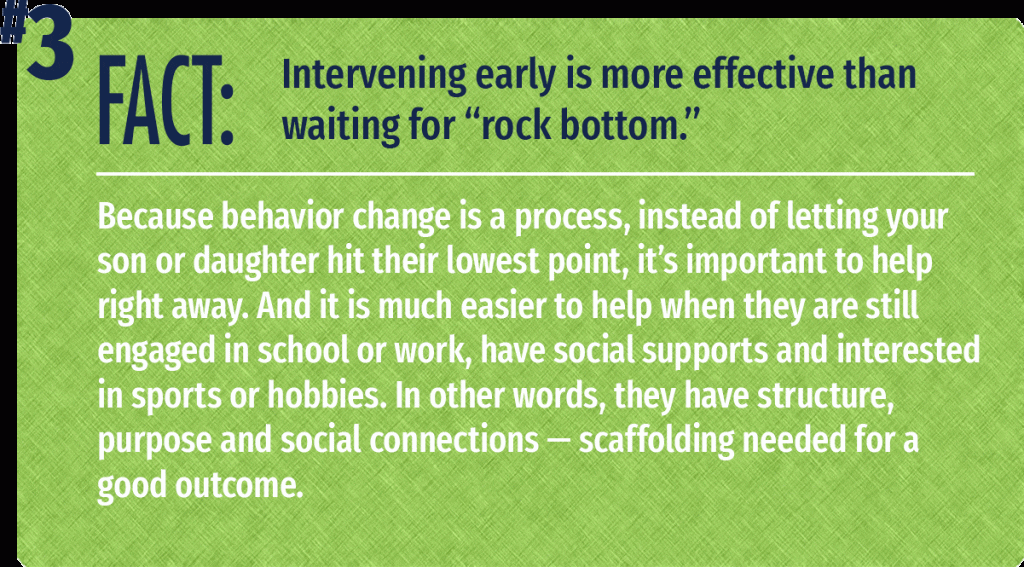
Here at Delamere we believe in arresting a drug problem as quickly as possible. The earlier the intervention, the better the odds of a successful long term outcome. Also a lot of pain and misery is avoided by treating a drug problem early.
No one needs to die of drug abuse or drug addiction! We offer lifesaving and life changing cutting edge drug treatment within our first class drug treatment and behavioural wellness facility.
It is our experience that no one needs to die of drug addiction and that no one is beyond recovery, no matter how dire their circumstances.
Delamere is a compassionate place of healing, we combine traditional evidence based drug treatment methods with a plethora of thoroughly researched and proven holistic treatments. All of our guests are treated with the utmost respect, empathy and dignity.
Our reviews from past guests speak for themselves. Most of our guests continue to access the free aftercare we provide as an important part of their ongoing recovery.
If you or a loved one want help for a drug abuse or drug addiction, we are here waiting to take your call. Even if you are unsure if you have a problem that requires professional treatment our colleagues are highly skilled and trained professionals who will gladly assess your or a loved ones drug use and provide you with the correct advice and support
To provide the best experiences, we use technologies like cookies to store and/or access device information.
Functional
Always active
The technical storage or access is strictly necessary for the legitimate purpose of enabling the use of a specific service explicitly requested by the subscriber or user, or for the sole purpose of carrying out the transmission of a communication over an electronic communications network.
Preferences
The technical storage or access is necessary for the legitimate purpose of storing preferences that are not requested by the subscriber or user.
Statistics
The technical storage or access that is used exclusively for statistical purposes.The technical storage or access that is used exclusively for anonymous statistical purposes. Without a subpoena, voluntary compliance on the part of your Internet Service Provider, or additional records from a third party, information stored or retrieved for this purpose alone cannot usually be used to identify you.
Marketing
The technical storage or access is required to create user profiles to send advertising, or to track the user on a website or across several websites for similar marketing purposes.