






Speak with our admission team
Call now on 0330 111 2015Jump to a section ▼
Many people drink alcohol to relax and unwind, some use alcohol to relieve the symptoms of anxiety in stressful situations, or to help them socialise.
Whilst it is not uncommon for alcohol to come into the equation during times of anxiousness, stress and uncertainty, excessive and prolonged drinking can lead to the worsening of an already existing anxiety related condition.
Alcohol can also trigger the onset of a new anxiety related disorder.
Anxiety can be mild, moderate or severe. At its worst it can be debilitating and extremely frightening. Alcohol may seem to calm episodes of acute anxiety, but the truth is it causes imbalances in the brain’s chemistry that in the long run will make the symptoms much worse.
If you or a loved one are suffering from an anxiety related disorder and have a problem with alcohol, our expert team of multidisciplinary professionals at Delamere can help you to make a full and lasting recovery.
At Delamere’s purpose built treatment and behavioural wellness facility, not only will you undergo intensive treatment to help heal the root causes of your problems, we will also equip you with the tools to manage your condition and enable ongoing recovery for the rest of your life.
You may be familiar with the term ‘fight or flight”. Well, this is essentially what anxiety is. The brain, for whatever reason, perceives danger and prepares the body and mind to either engage in battle or flee from the situation.
In anxiety related disorders the brain falsely perceives danger. Our thoughts are formed from our senses: sight, sound, touch, taste and smell. In an anxious person’s mind the senses can be distorted or trigger a traumatic memory. The brain reacts to this ‘perceived’ danger by entering a period of overactivity, releasing numerous chemicals into the body that create a number of anxiety related symptoms
It is not fully understood why anxiety disorders develop, or why it only affects certain people. There are however some recognised causes of anxiety that are clinically proven to be contributing factors, one of which is excessive alcohol use.
Common causes of anxiety include:
Whilst the cause of anxiety resides in the brain and in our thinking, the symptoms of anxiety present in our body and mind. This ‘reaction’ results from a concoction of powerful organic chemicals being released by the brain to prepare for ‘fight or flight” mode.
Physical symptoms of anxiety include:
Psychological symptoms of anxiety include:
The symptoms of anxiety do pass, your body can only sustain fight or flight mode for so long. After an anxiety attack you may feel very tired.
In the midst of an anxiety attack it can be very difficult to pinpoint what set it off. In those that frequently suffer from anxiety, known as generalised anxiety disorder (GAD), even a subconscious reaction can trigger an anxiety attack.
It is important to understand the symptoms of anxiety and why they are happening. This may help you to understand that this is a genuine mental health condition and seek the appropriate medical and therapeutic help and support.
There are variations of how anxiety can manifest from one person to another. Full blown anxiety related disorders come in a number of recognised associated behaviours.
Whilst the behaviours may vary, they tend to be coping mechanisms for the same illness, or associated to a specific type of anxiety.
Types of anxiety disorder include:
Much like many other mental health illnesses there is no quick fix. This is why many turn to substances such as alcohol, drugs and prescription medications. They want the traumatic feelings of anxiety to stop – immediately.
Alcohol, drugs and prescription medications only ever provide a temporary solution to a complex problem such as anxiety and depression. As soon as the effects of alcohol wear off the symptoms of anxiety return.
In cases of frequent or binge drinking to deal with anxiety, the symptoms of anxiety not only return but are also exacerbated. Experiencing anxiety after drinking alcohol is due to alcohol causing disruption to the brain’s chemistry and causing a further depletion to the organically produced chemicals that are essential to helping us feel in control, balanced and rational.
No matter how hopeless anxiety may seem and how long you have suffered from it, we guarantee you that alcohol (or any other substance for that matter) is not a solution.
In both the short term and long term alcohol will only make anxiety worse.
 Detox safely in our medical facility
 Free collection
 Future-proof
When treating anxiety and alcohol, it is vital that these two conditions are treated simultaneously for the best long term outcome. Treating one condition but not the other will inevitably lead to relapse of both conditions.
Not only must the person undergo comprehensive treatment to heal the root causes of their problematic use of alcohol and their anxiety disorder but they must also acquire tools to enable them to adapt and change their thinking.
Thinking influences the way that we feel, so in order to change from feeling anxious to peaceful, the individual will need to learn and implement the tools of recovery that enable them to consistently achieve this.
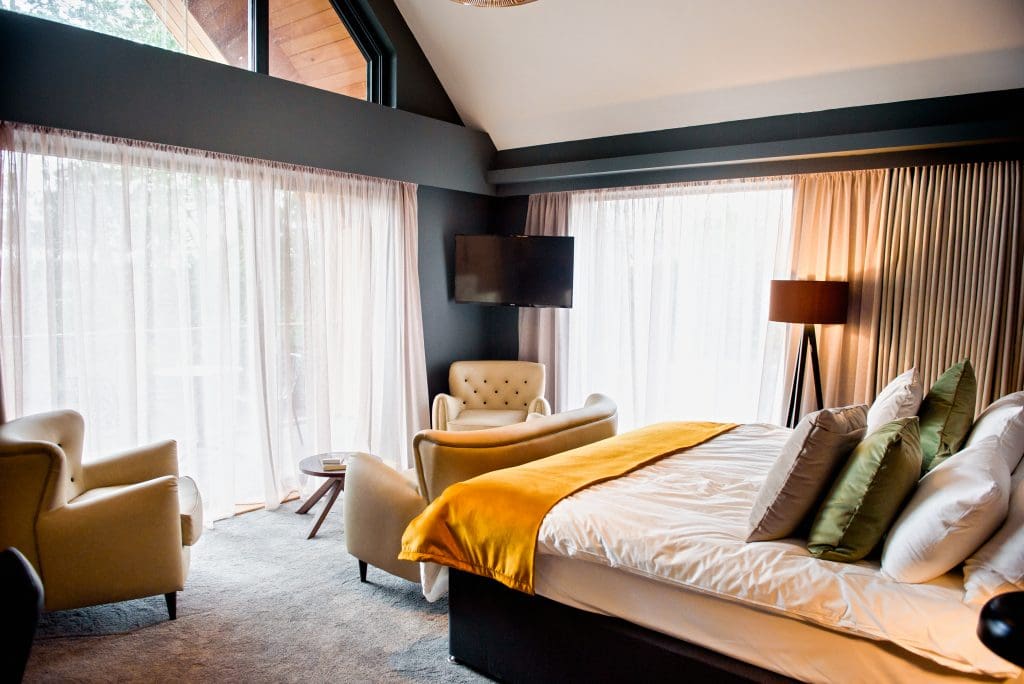
Alcohol abuse and anxiety are two very distressing conditions. At the severe end of the spectrum both can be debilitating and life threatening.
A sufferer of both anxiety and alcohol addiction can find themselves in a never ending cycle of drinking to relieve anxiety, with the anxiety and drinking becoming progressively worse.
The good news is that no matter how hopeless the situation may seem, Delamere offer an effective treatment programme that is adapted to your specific treatment needs. Most importantly, it works!
Our multidisciplinary team of medical, psychotherapy, counselling and holistic professionals work closely together to ensure that all bases are covered and treated comprehensively.
By undergoing one of our bespoke inpatient treatment programmes for alcohol and anxiety, we can show you how to live a life free from anxiety AND alcohol.
We use evidence based treatment methods, combined with innovative and thoroughly researched holistic therapies to bring about a dramatic change in perception and thinking in each of our guests.
Furthermore, our Delamere team affords extremely high levels of support throughout the whole process. We also provide practical support to assist you in transitioning your recovery from inpatient, back into the community and in achieving your goals.
Call our team of experts today to find out exactly how we can help you or a loved one to make a full recovery from anxiety and alcohol and live a life you never dreamed would be possible
References:
Start your recovery journey by calling our admissions team today.
Confidential. Straightforward. Friendly.