Ketamine Rehab at Delamere

Find out how to break free from addiction with targeted rehab therapy. Start enjoying life without ketamine today.

Book a free consultation

Ketamine Rehab
Ketamine Rehab
Dr Carney headshot
Clinically reviewed by
January 5, 2026

What is ketamine rehab?

Illegal use of ketamine has soared in recent years due to ease of availability and affordability, leading to a rise in addiction.

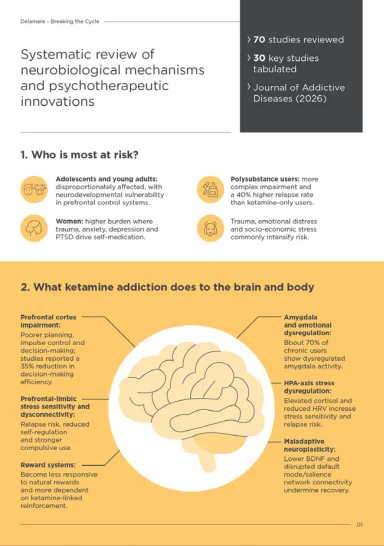
Since 2022, the number of young people reporting ketamine problems has increased from 5% to 9%¹ and the amount of adults entering rehab for ketamine is now over 12 times higher than it was ten years ago.²

As more people seek help, finding the right ketamine rehab provider is more important than ever. At Delamere, ketamine rehab involves a residential stay with a structured therapy programme to help you stop using safely. It will address the reasons for your ketamine addiction and give you strategies to overcome it.

Do I need rehab for ketamine?

Ketamine is a widely used analgesic, which can be used to treat pain and depression. It’s the non-prescribed misuse of ketamine that increases the risk of addiction. If you’ve been using it irresponsibly, in higher amounts than recommended, or mixing it with other drugs, you may have developed a dependence.

Signs you may have a ketamine problem

Think about how you’re using ketamine. Is it helping you to relax and relieve stress? Does it stop you from socialising with friends? Are you selling things or stealing to pay for your drugs? These are some of the signs of ketamine addiction.

Physical and mental symptoms

As you build up a tolerance to ketamine you may notice certain psychological and behavioural problems. This can range from feeling more anxious and depressed to experiencing hallucinations.

Ketamine bladder warning signs

You may have heard the term ‘ketamine bladder’. This is a medical problem that affects the structure of the bladder due to recreational use of ketamine. If you’ve been using this drug regularly, look out for symptoms such as an urgent need to pass urine, bladder pain and frequent urinary infections.

Steph Massey, Delamere speaks about the Ketamine crisis on This Morning

Ketamine withdrawal and detox during rehab

The side effects of ketamine withdrawal can be unpredictable outside of a hospital setting. That’s why we recommend an inpatient ketamine detox at the start of your rehab programme.

What does a ketamine detox involve?

  • Initial health screening and physical assessment
  • Medication to reduce withdrawal symptoms
  • 24/7 supervision from trained nurses
  • Light therapy with a trained counsellor
  • Rest and recuperation in a private room

How long does ketamine withdrawal last?

During rehab, you may experience a range of symptoms including cravings. The side effects from withdrawal are usually felt within the first three days and start to improve over the next two weeks.

“Delamere focuses on equipping you with the tools to love sobriety and understand what led to the addiction in the first place which really helped me grow.” – Former Delamere Guest


View Our Treatment Model View our Environment Call now: 0330 111 2015

What therapies are used in ketamine rehab?

The reasons for using ketamine, its side effects and severity of addiction are different for everyone. Some therapies that work for one person may be futile for another. By developing an individual treatment plan, we can help you get the right support to suit your needs.

Your rehab programme can include:

  • Individual and group counselling
  • Talking therapies such as Cognitive Behaviour Therapy (CBT)
  • Mindfulness-based relapse prevention
  • Family and couples’ therapy
  • Physical, nutritional and sleep hygiene therapy
  • Equine, music and art therapy

During your stay at our retreat in the beautiful Cheshire countryside, you will interact with your peers during group therapies, and most likely during meals and your downtime. Building relationships with others in similar situations helps to take the shame away from your addictions and allows you to create a supportive community of peers. At Delamere, we have found our community of guests to be an invaluable asset to our retreat as it creates a safe and supportive space for members to open up and grow.

Founder & CEO

“Trauma and addiction experiences are met with words that celebrate coping strategies. We use affirming language that celebrates past survival strategies and coping mechanisms. This helps clients to feel self-compassion and be connected to their own story.”

Martin Preston
Founder & CEO

The Delamere approach to ketamine rehab

At Delamere, our ketamine rehab programme takes a holistic approach to your recovery, supporting your mind, body and emotional health.
We’ve spent time developing a four-phase process to help you stop cravings, start therapy, grow beyond your addiction and bloom in your new life.

  • Delamere Treatment Model - Stop Icon
    Stage 1: Stop

    This phase addresses any physical aspects of your addiction. Our medical team is on hand 24/7 to ensure a safe and effective withdrawal.

  • Delamere Treatment Model - Start Icon
    Stage 2: Start

    During ‘Start’ we help identify the psychological underpinnings of your dependency as you participate in a variety of addiction treatment therapies.

  • Delamere Treatment Model - Grow
    Stage 3: Grow

    Our ‘Grow’ phase is the process of integrating the Delamere learning experience into life after treatment.

  • Delamere Treatment Model - Bloom Icon
    Stage 4: Bloom

    Our ‘Bloom’ phase offers intensive support on a weekly basis for the first three months of recovery once guests return home.

Helping someone who has a problem with ketamine

You may have noticed a friend or colleague is developing a dangerous reliance on ketamine. Perhaps you’re worried about your own child or parent. Often people become blinkered by their desire for drugs. Simply by pointing them in the right direction you can intercept this destructive path.

If you’re ready to stage an intervention, talk to Delamere. Our trained professionals know exactly how you’re feeling and can guide you through the process. With their support you can get your loved one the help they deserve for their ketamine addiction. Call us today on 0333 323 1132 and plan for a different future.

Discuss an intervention

  • 24-hour care & support
    24-hour care & support
  • UK's only purpose build clinic
    UK's only purpose build clinic
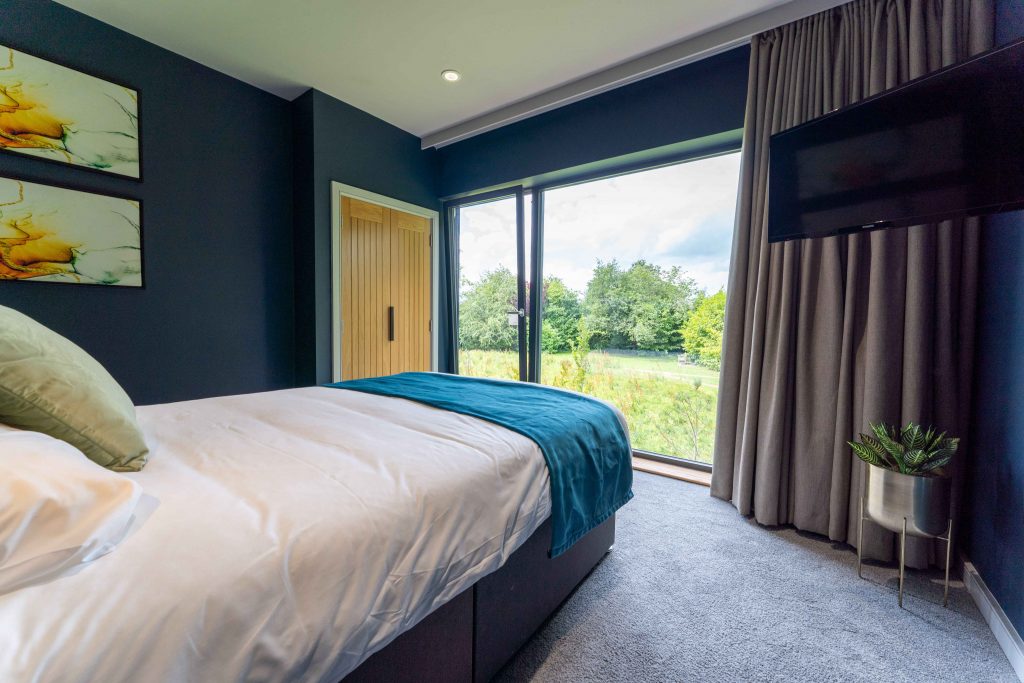
  • All accommodation en-suite
    All accommodation en-suite
  • Discreet, private location
    Discreet, private location
  • Family programmes
    Family programmes
  • Unique, innovative treatment approach
    Unique, innovative treatment approach
  • Outcomes focused
    Outcomes focused
  • Free collection service
    Free collection service
  • Air Conditioning
    Air conditioning

Frequently asked questions about ketamine addiction rehab

Why choose Delamere for ketamine rehab?

The best treatment for ketamine addiction comes in the form of a supervised and medically managed detox and a comprehensive residential rehabilitation programme. At Delamere, we provide our guests with an intensive four-phase treatment programme to help them get to the root cause of their addictions in a relatively short space of time.

Our discrete, private rehab facility is set in the tranquillity of rural Cheshire, making it the perfect place to press pause and take the time to focus on getting well.

Is ketamine rehab necessary?

Contrary to the belief that ketamine does not cause physical dependence when used frequently, users will develop a tolerance to the drug. This causes those who frequently use ketamine to require larger doses to feel ketamine’s desired effects.

Ketamine, when abused, can cause tolerance and dependence to develop. On stopping ketamine where a dependence has occurred, a user will develop both psychological and physiological withdrawal symptoms. Ketamine rehab at Delamere provides a safe environment to stop using ketamine and complete a comfortable assisted detox.

Is ketamine addiction treatable?

Yes, with the right combination of mental and physical support, ketamine addiction is treatable. The best approach is with an individualised treatment plan, medical withdrawal support, evidence-based therapy and ongoing aftercare to prevent relapse.

People who have developed ketamine bladder may require additional medical interventions, depending on the extent of harm.

Can you treat ketamine and alcohol addiction together?

Yes, we can help with both alcohol and ketamine rehab at the same time with a single, integrated care plan. Priority will be placed on safe withdrawal from both substances with therapy that addresses the reasons behind addiction. You can find out more about the dangers and effects of mixing alcohol with ketamine in our help guides.

Can I keep working during ketamine treatment?

During a residential rehab programme, it’s usually difficult to continue working. This is because the process is intensive and requires focused dedication. It’s also hard to work through withdrawal symptoms when your body needs total rest. We can help you to discuss the process with your employer confidentially to minimise disruption.

Let us help you today

Start your recovery journey by contacting us today.

Confidential. Straightforward. Friendly.

Get the support you need Call now: 0330 111 2015

Help and Support for Ketamine Addiction

Discover more advice about ketamine rehab on the blog

  • What really happens to the brain and body when you take ketamine?

    Find out what really happens to the brain & body when you take ketamine? LBC came to Delamere to speak about the increasing harm associated with ketamine use.

  • Cannabis is no longer just a ‘gateway drug’

    A recent study shows that cannabis use increases the risk of paranoia & poor mental health outcomes. Find out more at Delamere.

  • Everything you need to know about ketamine bladder

    What is ketamine bladder? Find out everything you need to know about ketamine bladder at Delamere Health.

  • Paying the price for a party: How cocaine can affect the brain

    Delamere takes a look at how cocaine can affect the brain. Read our blog, Paying the price for a party.