
Introducing Delamere’s Extended 6 week Treatment Programme

- Introducing Delamere’s new treatment phase, Root
- Getting to the Root of addiction
- Discovering your addiction archetype
- Reigniting your neurological pathway
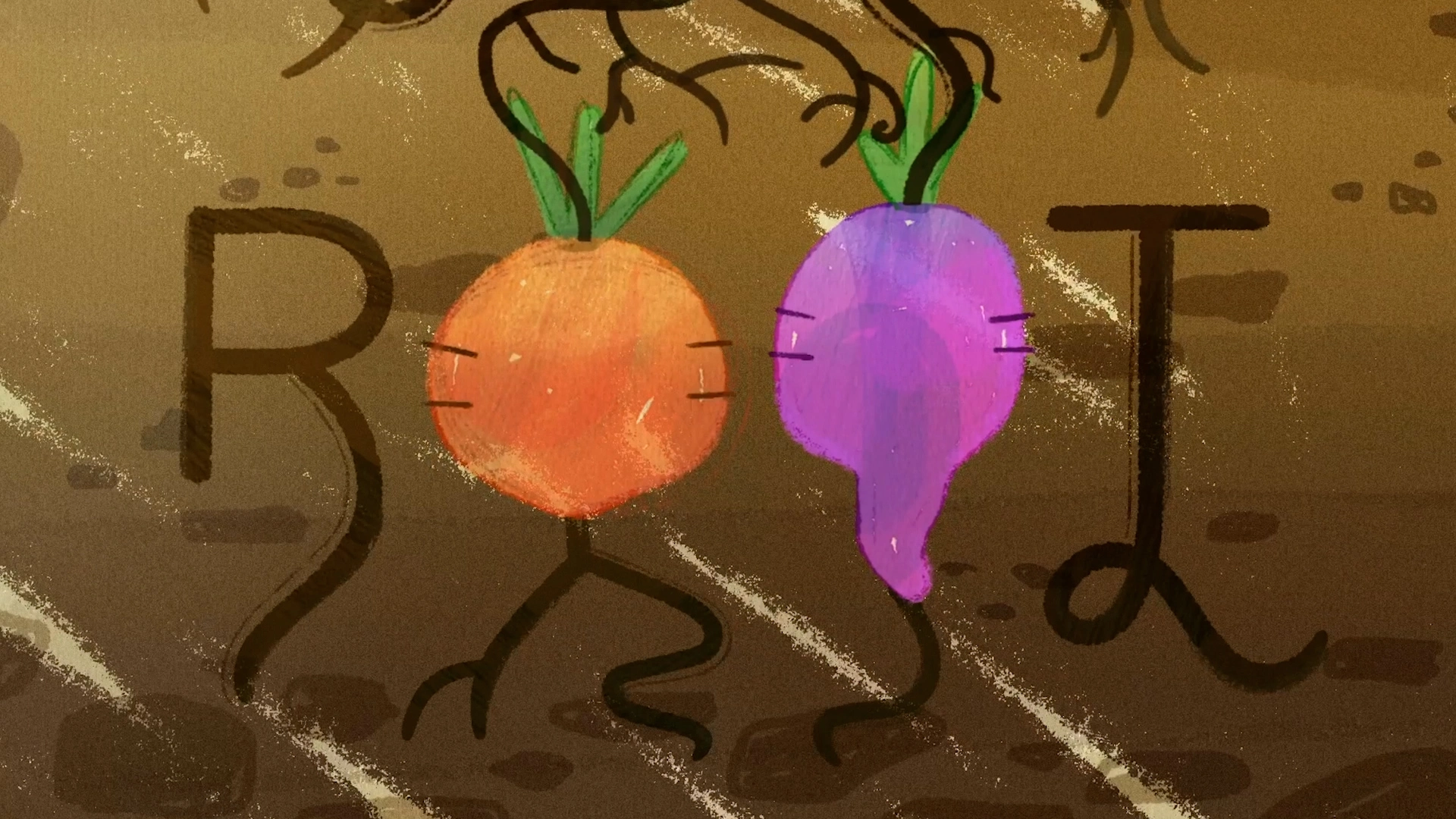
Introducing Delamere’s new treatment phase, Root
At Delamere, recovery follows a path we know well: Stop, Start, Grow, Bloom, a lovingly curated and meticulously executed approach that has helped more than one thousand Delamere guests to break free from, and thrive beyond, addiction.
We’re proud of our unique and holistic approach to addiction treatment, working hand in hand with each guest who walks our path to develop the bespoke tools that will support lasting, meaningful change.
Our treatment model works brilliantly, but for some, healing needs to go deeper.

That’s why we created Root; a pioneering, two-week extension of our core 28-day programme. It’s an immersive, advanced track for guests where precision meets possibility, scientifically designed to identify the root cause of addiction.
Combining comprehensive assessments, experiential therapies and responsibly structured off-site days, Root is designed to uncover underlying drivers, giving guests a clearer understanding of their own addiction and behavioural patterns and helping us to create a reliable anchor for lasting change.
Getting to the Root of addiction
Our in-house clinicians have expertly crafted an industry leading, neuroscience-based assessment offered exclusively to Root guests.
The detailed assessment reveals how the brain’s core emotional systems are working in real time, mapping them precisely to reveal which are overactive, which are depleted, and which are responsible for driving behavioural patterns within a guest’s addiction.
This process takes the guesswork out of treatment in a way that has never been done before and following this comprehensive assessment, Root guests will receive a bespoke, detailed ANTS (Affective-Neural Triage Scale) report.
This doesn’t diagnose or label our guests. Instead, it provides an invaluable snapshot of how strongly certain emotional and cognitive networks are firing; ancient systems that govern stress, motivation and survival, alongside the thinking and memory centres.
This helps our clinical and recovery teams identify the most beneficial methods of individualised support, from behavioural activation and cognitive behavioural therapy (CBT) to trauma-focused therapy, dialectical behaviour therapy (DBT) or mindfulness.
Through a partnership with The Farm Club, we’re privileged to offer Root guests exclusive breathwork sessions and cold-water immersion therapy at beautiful Pickmere Lake, alongside equine therapy and other holistic methods designed to support the recovery journey beyond a guest’s residency at Delamere.
We also encourage Root guests to take time away from Delamere during the Root phase of their treatment programme; allowing them to apply the vital tools we provide them with to the real world, beyond the ‘safety net’ of Delamere.

Discovering your addiction archetype
Our comprehensive Root assessment measures key affective circuits. These are seeking, rage, fear and panic, grief and loss.
It also delves into key cognitive networks, such as the pre-frontal cortex, anterior cingulate cortex, default mode network, amygdala and hippocampus, exploring how these circuits and systems are interacting to shape emotional regulation, stress responses, memory processing and decision-making.
Research suggests that certain patterns of affective and neural activity may lead to a predisposition to different types of addictive behaviour. Delamere’s ANTS reports are categorised as one of three broad subtypes. These are:
Reward-Deficit Type, or “The Impulsive One”.
Here, the seeking system and decision-making regions, like the anterior cingulate cortex, may be underactive.
This guest may feel apathetic, unmotivated and unrewarded by everyday activities. They might seek out intense stimulation, such as drugs, gambling or extreme sports to feel ‘alive’.

Stress-Surfeit Type, or “The Stressed One”.
For this individual, the rage, fear and panic systems are overactive, and the reward system is relatively downregulated. They may use substances or behaviours to soothe overwhelming anxiety, anger or loneliness.
Executive-Dysfunction Type, or “The Chaser”.
This subtype involves high activity in the default mode network and difficulty in the prefrontal cortex and anterior cingulate cortex systems. This can lead to rumination, poor planning and impulsivity.
For people whose executive dysfunction is the root cause of addiction, they may experience struggles in resisting cravings and may find it difficult to act on long-term goals.
Reigniting your neurological pathway
Whatever your archetype, Root reignites a guest’s pathways, carefully bringing them back to life through a curated series of clinical and holistic therapies, creative projects and experientials which mirror different healing processes.
This is precision care, bespoke treatment matched to your brain, your history, your pattern of behaviour.

Our core programme plants the seed of new growth, beginning above ground.
Root allows healing to dig deep, unseen but vital, providing an anchor to empower you to build a future that can truly flourish as you grow beyond addiction.
For more information about Root, please contact a member of our team today.


Professional help at Delamere
At Delamere, we understand that addiction can be complex and challenging. Our comprehensive treatment approach addresses both the physical and psychological aspects of addiction, helping individuals break free from dependency and build a foundation for lasting recovery.
Our Stop, Start, Grow, Bloom programme guides guests through:
- Stopping harmful behaviours and breaking the cycle of addiction
- Starting to address the underlying psychological and emotional factors
- Growing healthier coping strategies and life skills
- Blooming into long-term recovery with ongoing support

Latest from Delamere
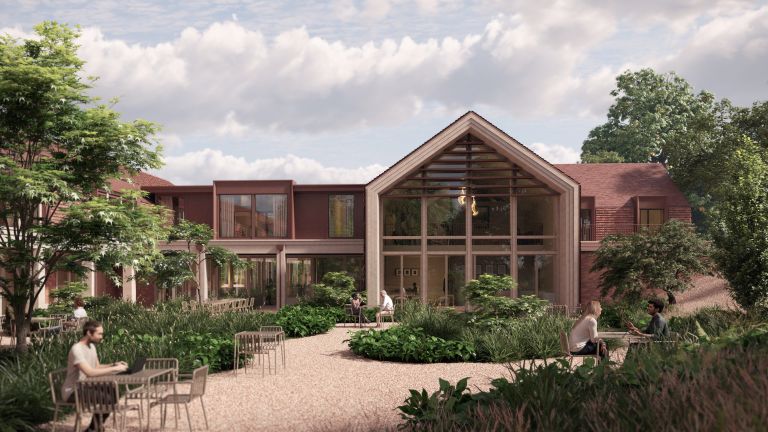
Delamere Expands to Nottingham with Second Purpose-Built Facility
Delamere is delighted to announce that work has begun on...


Recovery Journeys – Glynn Horne
We created Root; a pioneering, two-week extension of our core 28-day programme. It’s an immersive, advanced track for guests at Delamere.

Recovery Journeys: How burnout opened the door to addiction
We created Root; a pioneering, two-week extension of our core 28-day programme. It’s an immersive, advanced track for guests at Delamere.

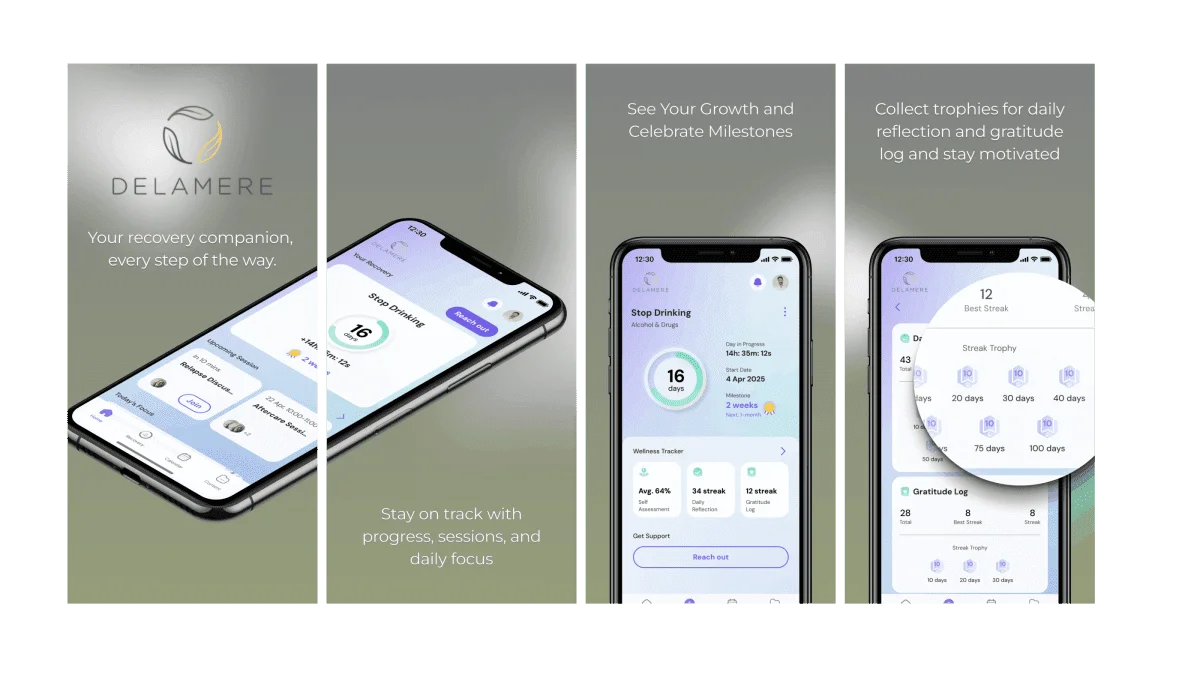
Delamere Alumni App: Measuring What Really Matters in Recovery
A guest blog from Robbie Ransom at Barney Recovery introducing the Delamere Alumni app, measuring the outcomes of addiction recovery for our…